
Things you should know about airfreight
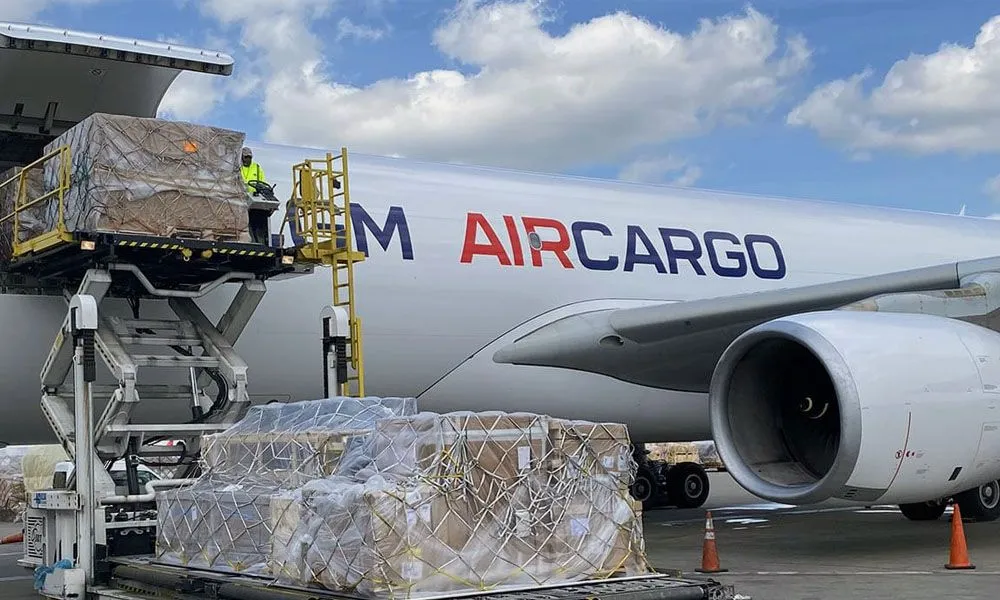
Airfreight is the most modern and dynamic branch of transport that enables to carry the cargo in the shortest time possible. Due to the specificity of this type of transport, it is used primarily for the carriage of perishable, valuable, or urgently needed goods.
One feature that distinguishes airfreight from other means of transport is the transit time – cargo transportation from China to Europe can take from 3 up to around 7 days depending on the selected service, with an average of 5 working days. In comparison, sea transport would take around a month in this case. However, the time savings are followed by relatively high costs, which will be discussed further in the article.
Each year several tens of millions of tons of cargo are transported by air. At any moment there are from 8 to 20 thousand passengers and cargo aircraft over the globe (depending on the season and time of the day).
Stages of air transportation
In most cases, air transport is entrusted to an independent forwarding company. That being said, it is worth knowing what steps are included in the transportation process:
- delivering cargo from the supplier to the airport;
- customs clearance at the place of dispatch;
- cargo loading and transfer to the destination airport;
- cargo unloading and customs clearance in the destination country – only after the verification of relevant documents and settlement of charges will the cargo be released;
- delivering cargo from the airport to the recipient.
Types of air freight
There are different types of air freight depending on the way it is organized:
- consolidated freight – many different shipments placed in one flight. It is the most cost-effective method, however it may extend the transit time by several days (due to waiting for the necessary number of shipments to be collected);
- direct services (back-to-back) – parcels travel in the hold of an aircraft taking a scheduled flight. In this case, size restrictions apply, especially if we opt for the cheapest option, which is placing a standard size ULD (Unit Load Device, approximately 307 x 213 x 193 cm) parcel in the front part of the hold. One advantage of this method is the possibility to choose a direct flight to the destination;
- charter – definitely the most costly and the least popular form among small companies, where an entire plane is chartered to carry a specific cargo and you have to pay for a round trip.
Some other categories refer to the type of cargo:
- general cargo – non-restricted goods, such as clothing, accessories, or certain types of electronics;
- special cargo – restricted goods, which are (depending on the airline) e.g. lithium-ion batteries, works of art, and power banks; restricted items can only be carried under strict supervision and with the consent of the carrier.
Advantages and disadvantages of airfreight
Before you decide to use airfreight, it is good to realize the advantages and disadvantages of this type of transport and then make a decision based on your own situation. The strengths of air transport include:
- high speed,
- easy access (especially important in landlocked countries),
- easy shipment tracking – you can watch the location of your cargo live, protecting delicate and valuable cargo from damage (when properly packed).
The disadvantages of airfreight, in turn, include:
- high cost,
- a large number of goods subject to restrictions or prohibited for air transportation,
- environmental harmfulness,
- lower carrying capacity in comparison to other means of transport.
Cost of airfreight
The cost of airfreight is usually calculated based on tariff and cargo weight. One exception is a situation in which the cargo is of non-standard dimensions and the volume-to-weight ratio is high – in such a case the volumetric weight will be taken into account. It can be calculated in different ways by various carriers, as the volume in cubic centimeters divided by 5000 or volume in CBM multiplied by 167. It is therefore usually more profitable to ship more “dense” consignments by air.
It should be noted that covering the cost of transit is not all. Besides, you still have to pay the customs duty and VAT, which are calculated as a percentage of the sum of the cost of goods + cost of delivery. This means that the tax will be higher in the case of expensive delivery. That is why transporting goods of low monetary value by air may turn out to be uneconomic.
It is also worth verifying what constitutes the price of carriage offered by the forwarder. It often does not include additional costs, such as the fuel surcharge, which you will be obliged to cover.
Airfreight and Incoterms
Transport of goods is closely related to Incoterms, i.e. the International Commercial Terms. These define the scope of responsibility, division of costs and obligations between the buyer and the seller. Experienced entrepreneurs sometimes decide on solutions that place most of the responsibility on themselves, but at the same time help reduce costs.
When it comes to airfreight, the following Incoterms may apply: EXW, FCA, CPT, CIP, DPU, DAP, DDP.
The buyer bears the most responsibility when EXW or FCA apply, whereas DPU, DAP, and DDP imply the least responsibility on the buyer's side.
Packing goods for air transport
Proper cargo packaging is essential for its economic and safe delivery. First of all, the elements inside the box must be packed as tightly as possible using various types of void fill, e.g. polystyrene or bubble wrap. This will prevent the elements from bumping against each other, and you will avoid overpaying for carrying empty space.
Air transport cargo can be arranged in the form of single parcels or pallets, however, the latter may incur additional costs.
Goods subject to restrictions in air transportation
The list of goods subject to restrictions in air transportation is quite long due to its specificity. Depending on the choice of airline and type of cargo, those items are either categorically prohibited for carriage or require the carrier’s consent and special safety measures. In case your cargo falls under one of the following categories, you may consider sending it by sea.
The most common restricted items are for example: Explosives, gases, strong magnets, toxins and hazardous substances, flammable and radioactive items, lithium batteries, precious metals and works of art.
Customs clearance and airfreight
During the customs clearance (both in the country of origin and destination) specific documents will be necessary. The most important ones are:
Commercial Invoice, Air Waybill (AWB). Optionally, you may have to provide: Packing List (a complete list of goods in the shipment), Certificate of Origin, other relevant certificates.
All these documents are prepared by the freight forwarder and/or the seller.
The importer is obliged to settle tax and customs duties. As we have already mentioned, both customs duty and VAT are calculated as an adequate percentage of the total value of goods and delivery.
Our team is happy to help with your project.